

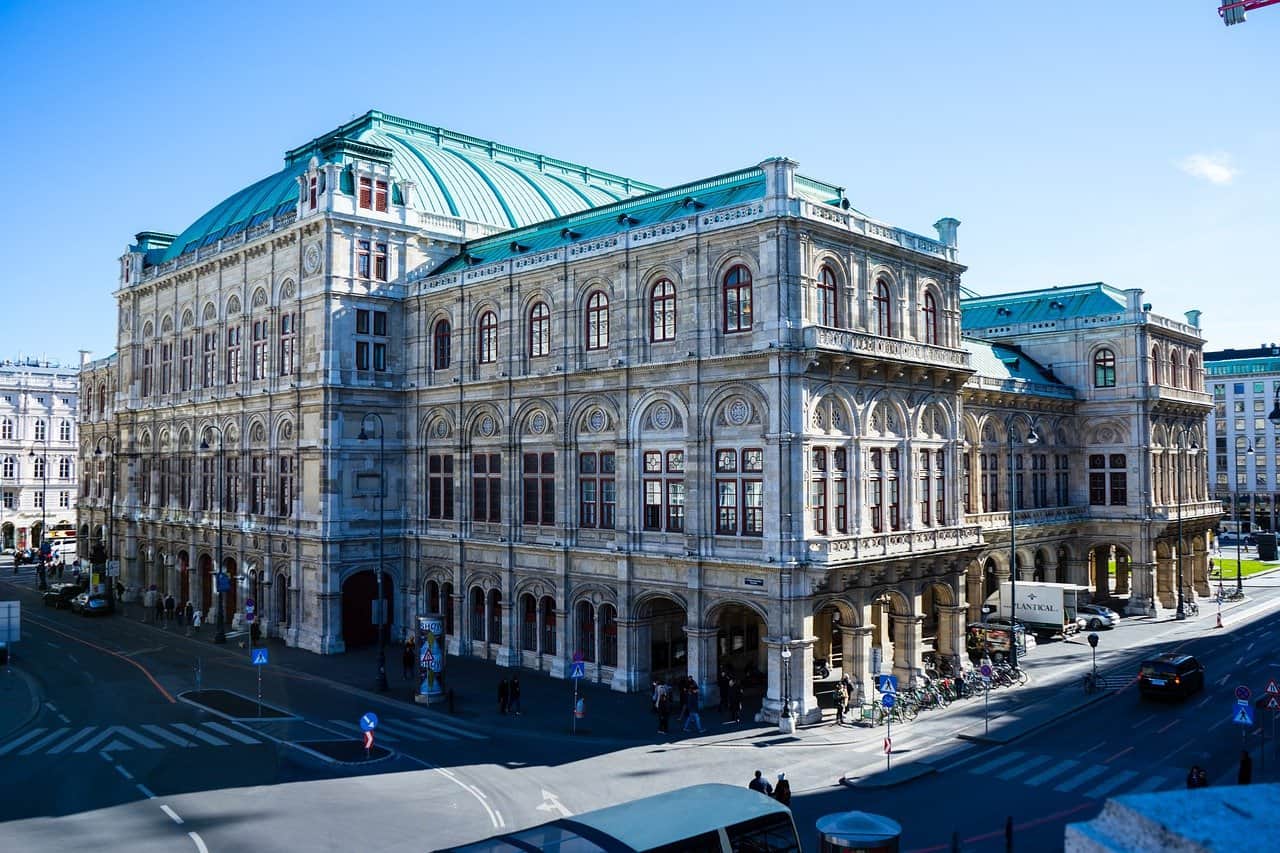
Vienna, often heralded as the “City of Music,” has an illustrious history as a hub for some of the most influential composers and musical movements in Western classical music. This rich musical heritage spans several centuries, shaping Vienna into a cultural landmark.
Classical Period
Wolfgang Amadeus Mozart (1756-1791)
Mozart is one of the most celebrated composers in history, known for his prodigious talent and extensive oeuvre. Born in Salzburg, he spent a significant part of his career in Vienna. His compositions include symphonies, operas, chamber music, and piano concertos. Notable works include “The Magic Flute,” “Don Giovanni,” and “Eine kleine Nachtmusik.”

Ludwig van Beethoven (1770-1827)
Beethoven, though born in Bonn, Germany, made Vienna his home and the center of his musical career. His compositions mark the transition between the Classical and Romantic eras. Famous works include his nine symphonies, particularly the Fifth and Ninth (“Ode to Joy”), as well as piano sonatas like the “Moonlight Sonata.”
Romantic Period
Franz Schubert (1797-1828)
A native Viennese, Schubert is renowned for his lieder (German art songs) and symphonies. His compositions blend lyrical melodies with rich harmonic textures. Key works include the “Unfinished Symphony” and the song cycle “Winterreise.”
Johann Strauss II (1825-1899)
Known as the “Waltz King,” Strauss II brought the Viennese waltz to international acclaim. His famous works include “The Blue Danube” and the operetta “Die Fledermaus.” His compositions capture the spirit of 19th-century Vienna’s ballrooms and festive culture.

20th Century and Beyond
Arnold Schoenberg (1874-1951)
Schoenberg, a pivotal figure in the Second Viennese School, revolutionized music with his development of the twelve-tone technique. This atonal method broke away from traditional harmonic structures. His works include “Pierrot Lunaire” and “Verklärte Nacht.”
Alban Berg (1885-1935) and Anton Webern (1883-1945)
Students of Schoenberg, Berg and Webern furthered his innovative techniques. Berg’s operas “Wozzeck” and “Lulu” and Webern’s concise and highly structured compositions left a lasting impact on 20th-century music.
Vienna’s Musical Institutions
Vienna Philharmonic Orchestra
Founded in 1842, the Vienna Philharmonic is one of the world’s leading orchestras, known for its distinctive sound and tradition. It plays a central role in Vienna’s musical life, performing at the annual New Year’s Concert, a globally televised event.
Vienna State Opera
This prestigious opera house has been a cornerstone of Viennese culture since its opening in 1869. It has hosted premieres of significant works and performances by legendary artists.
Musikverein
The Musikverein, inaugurated in 1870, is renowned for its acoustically superb Golden Hall. It is home to the Vienna Philharmonic and is a key venue for classical music performances.
Modern Vienna
Vienna continues to be a vibrant center for music, hosting numerous festivals and concerts that celebrate both its classical heritage and contemporary music. The city’s musical institutions and its nurturing of new talents ensure that Vienna remains a pivotal location in the global music scene.
In summary, Vienna’s music history is a tapestry of influential composers, groundbreaking works, and prestigious institutions, making it an enduring beacon of musical excellence.